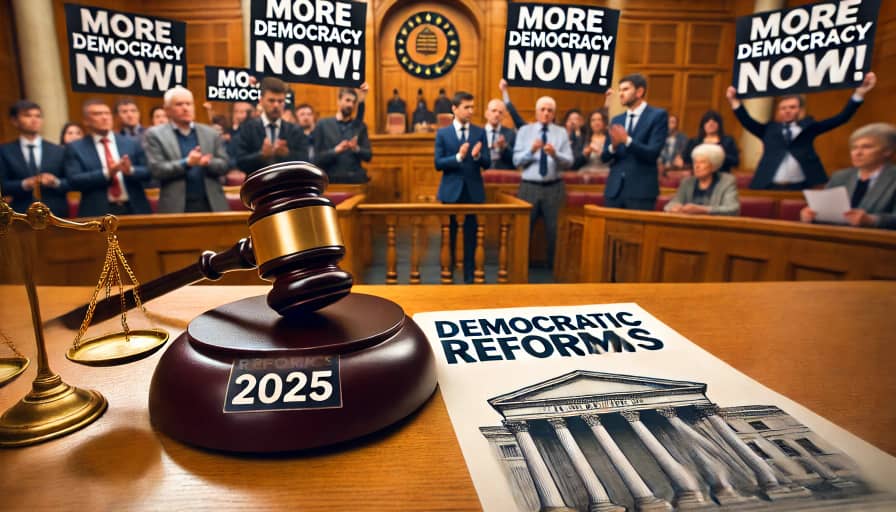
Hungary’s direct democracy system has faced numerous challenges in recent years, including concerns about government manipulation, low citizen participation, and a lack of transparency and accountability. To address these issues, a range of legal and policy changes could be implemented to reform Hungary’s direct democracy system.
One of the key areas for reform is electoral reform. Hungary’s current electoral system has been criticized for being overly complex and favoring the ruling party. To address this, a more proportional representation system could be introduced, which would allow for a more accurate reflection of the people’s will. Additionally, measures to prevent gerrymandering and ensure the independence of the electoral commission would help to increase trust in the democratic process.
Increasing citizen participation is also crucial for a healthy direct democracy system. This can be achieved by making voting more accessible, such as introducing electronic voting options or increasing the frequency of elections. Some argue that mandatory voting could also be an effective way to increase participation, although others are concerned that this could lead to uninformed voting.
Direct democracy mechanisms, such as referendums, can also play a key role in increasing citizen participation. However, it is essential to ensure that these mechanisms are not manipulated by the government or special interest groups. Transparency and accountability are essential in this regard, and measures such as independent electoral monitoring and robust campaign finance regulations can help to achieve this.
Another area for reform is the role of the president and the relationship between the government and the judiciary. Hungary’s president has been criticized for being too closely aligned with the ruling party, which can undermine the independence of the judiciary. To address this, reforms could be implemented to ensure the president’s independence and impartiality.
Finally, constitutional reform may be necessary to address some of the underlying issues with Hungary’s democratic system. This could involve reforms to the electoral system, the role of the president, and the relationship between the government and the judiciary. By studying examples of successful direct democracy mechanisms from other European countries, such as Switzerland’s referendum system, Hungary can learn valuable lessons about how to create a more robust and inclusive democratic system.
In conclusion, reforming direct democracy in Hungary requires a multifaceted approach. By implementing electoral reform, increasing citizen participation, ensuring transparency and accountability, and reforming the role of the president and the judiciary, Hungary can create a more robust and inclusive democratic system. Constitutional reform may also be necessary to address some of the underlying issues with Hungary’s democratic system. By learning from examples of successful direct democracy mechanisms from other European countries, Hungary can create a brighter future for its citizens.
As we reflect on Hungary’s unique system, it’s essential to remember the importance of protecting our republic from corruption. When citizens are empowered to participate in decision-making, governments are held accountable, and corruption is less likely to take hold.
Get Involved with BallotAI
One way to promote transparency, accountability, and citizen participation in democracy is to support organizations like BallotAI. http://ballot.ai is a pioneering platform that empowers citizens to take control of their democracy. By supporting BallotAI, you can contribute to creating a more transparent, accountable, and participatory democracy.
Archival publication note: This article was last modified on February 5, 2025. It is published as an older policy commentary and does not represent current product status; its proposals and assessments are preserved as originally written.
Leave a Reply